How to Calculate GPA (Step-by-Step Guide)
 By Dhananjay Kumar Nirala schedule 3 min read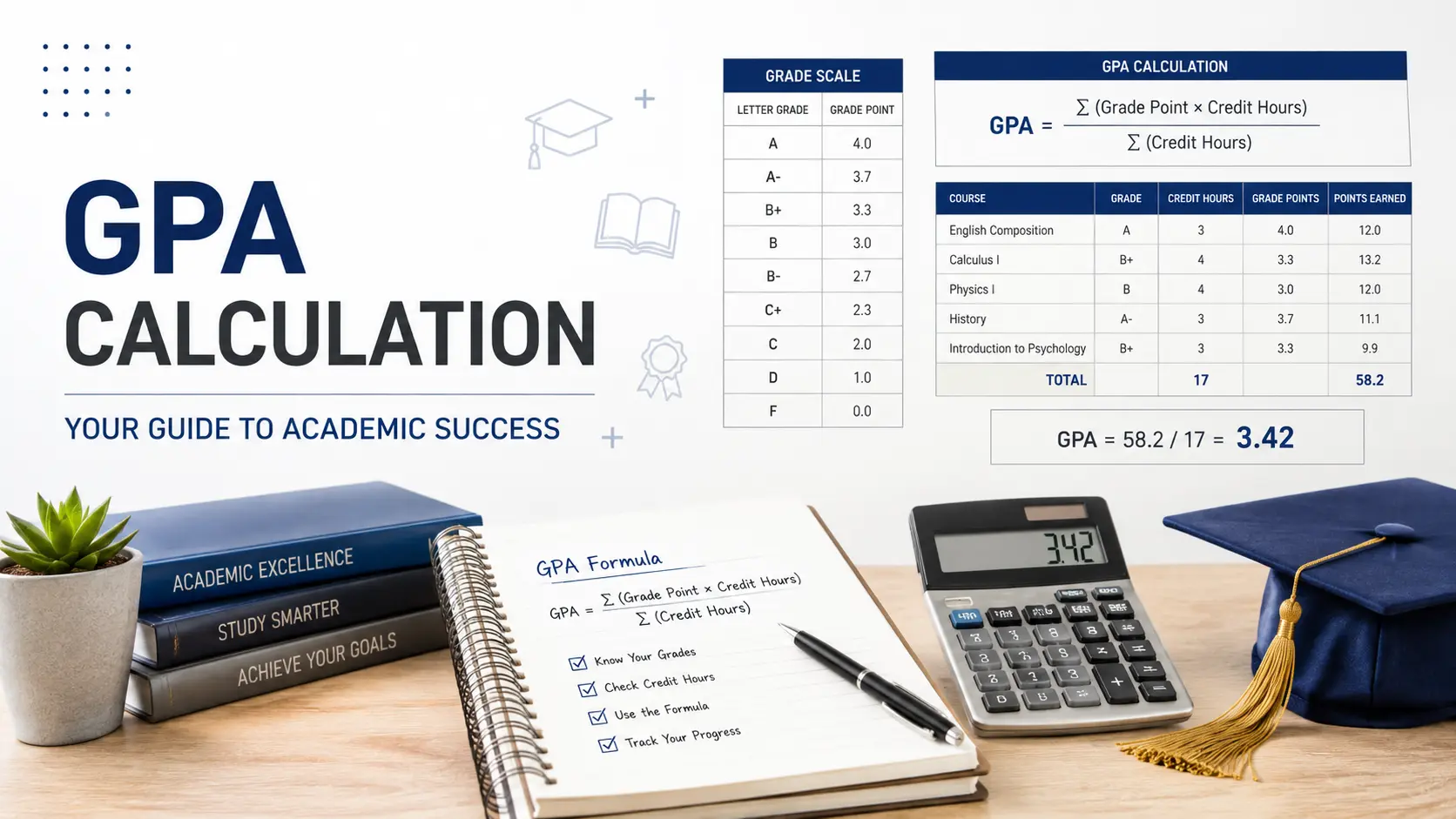
chevron_right On this page 12 sections
- 01 What Is GPA?
- 02 Step 1: Convert Letter Grades Into Grade Points
- 03 Step 2: Multiply Grade Points by Credit Hours
- 04 Step 3: Add Total Credit Hours
- 05 Step 4: Divide Total Grade Points by Total Credits
- 06 Example of GPA Calculation
- 07 Common Mistakes When Calculating GPA
- 08 Can GPA Scales Be Different?
- 09 Why GPA Matters
- 10 Conclusion
- 11 Related Calculators & Guides
- 12 FAQ
GPA, or Grade Point Average, is one of the most common ways schools, colleges, and universities measure academic performance. If you want to understand how GPA is calculated, the process is usually simple once you know your course grades and credit hours.
In this guide, you’ll learn how to calculate GPA step by step, along with examples and common mistakes to avoid.
What Is GPA?
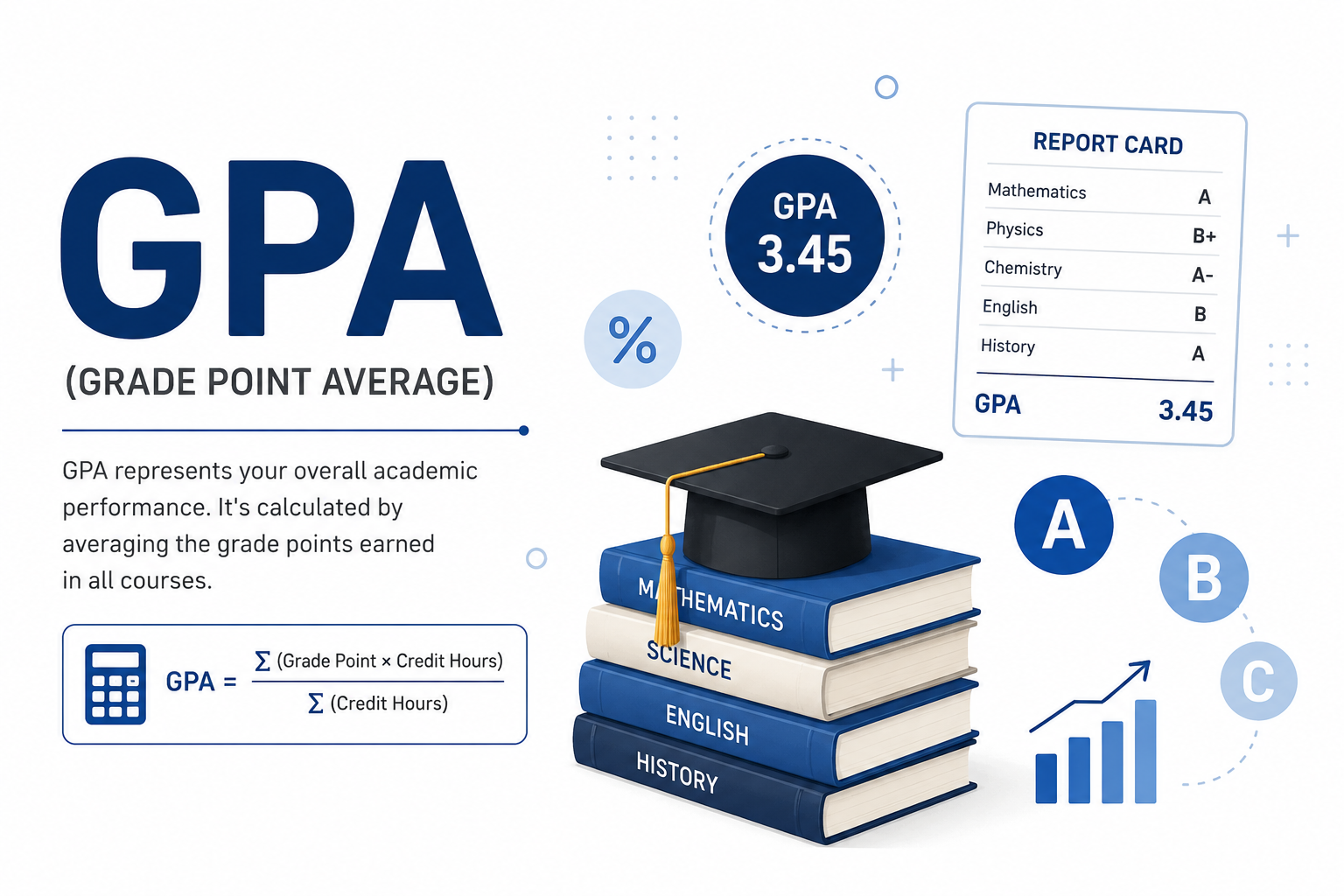
GPA stands for Grade Point Average. It shows the average of your grades across subjects or courses.
Many institutions use GPA to:
Track academic performance
Determine scholarships
Check graduation requirements
Compare semester results
The most common system is the 4.0 GPA scale.
Step 1: Convert Letter Grades Into Grade Points
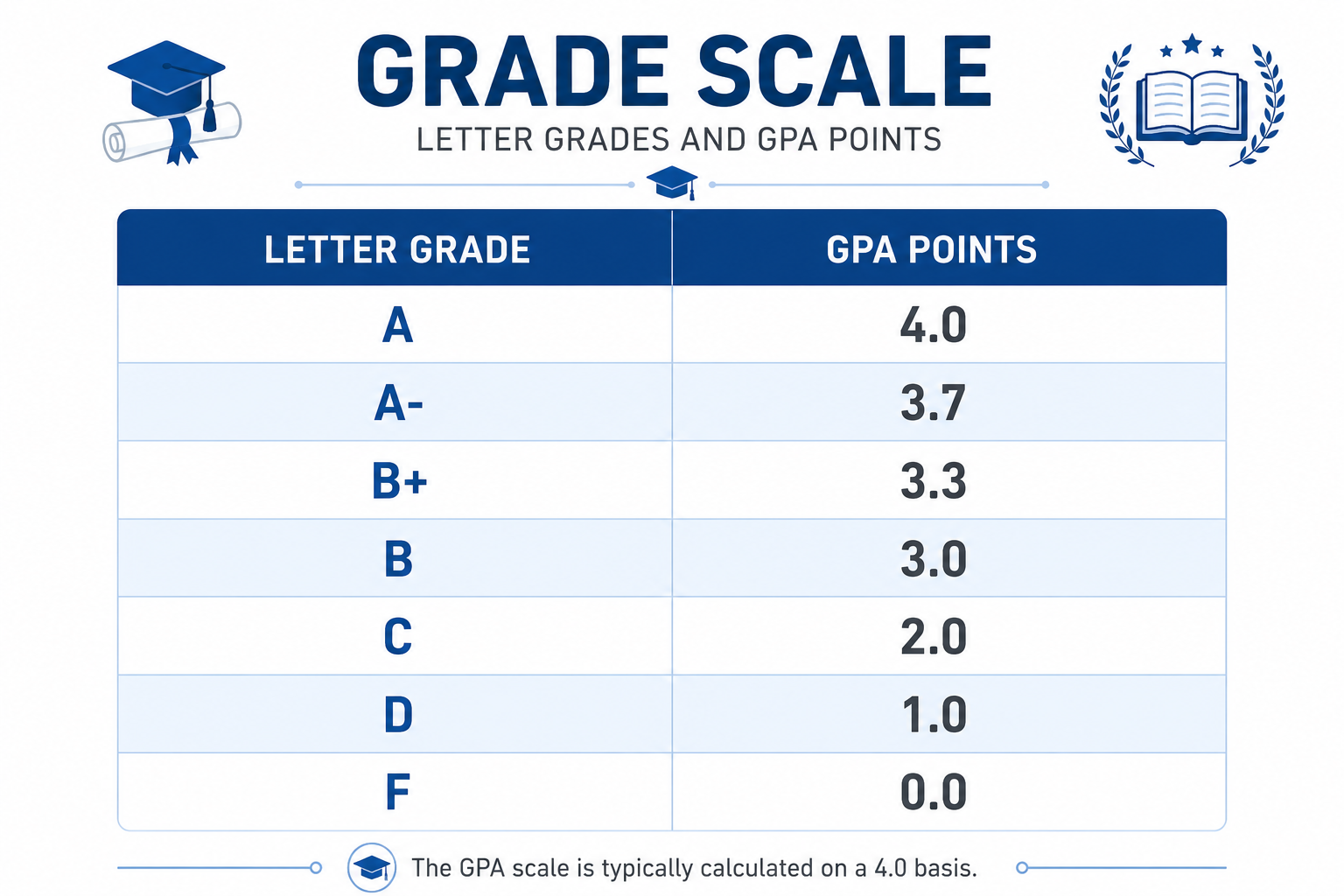
Each letter grade usually has a grade point value.
Letter Grade | Grade Point |
|---|---|
A | 4.0 |
A- | 3.7 |
B+ | 3.3 |
B | 3.0 |
B- | 2.7 |
C+ | 2.3 |
C | 2.0 |
D | 1.0 |
F | 0.0 |
Some schools may use slightly different scales.
Step 2: Multiply Grade Points by Credit Hours
Now multiply each course grade point by its credit hours.
Example:
Subject | Grade | Grade Point | Credit Hours | Total Points |
|---|---|---|---|---|
Math | A | 4.0 | 3 | 12 |
Science | B+ | 3.3 | 4 | 13.2 |
English | A- | 3.7 | 3 | 11.1 |
Total grade points = 36.3
Step 3: Add Total Credit Hours
Now add all credit hours:
3 + 4 + 3 = 10 credit hours
Step 4: Divide Total Grade Points by Total Credits
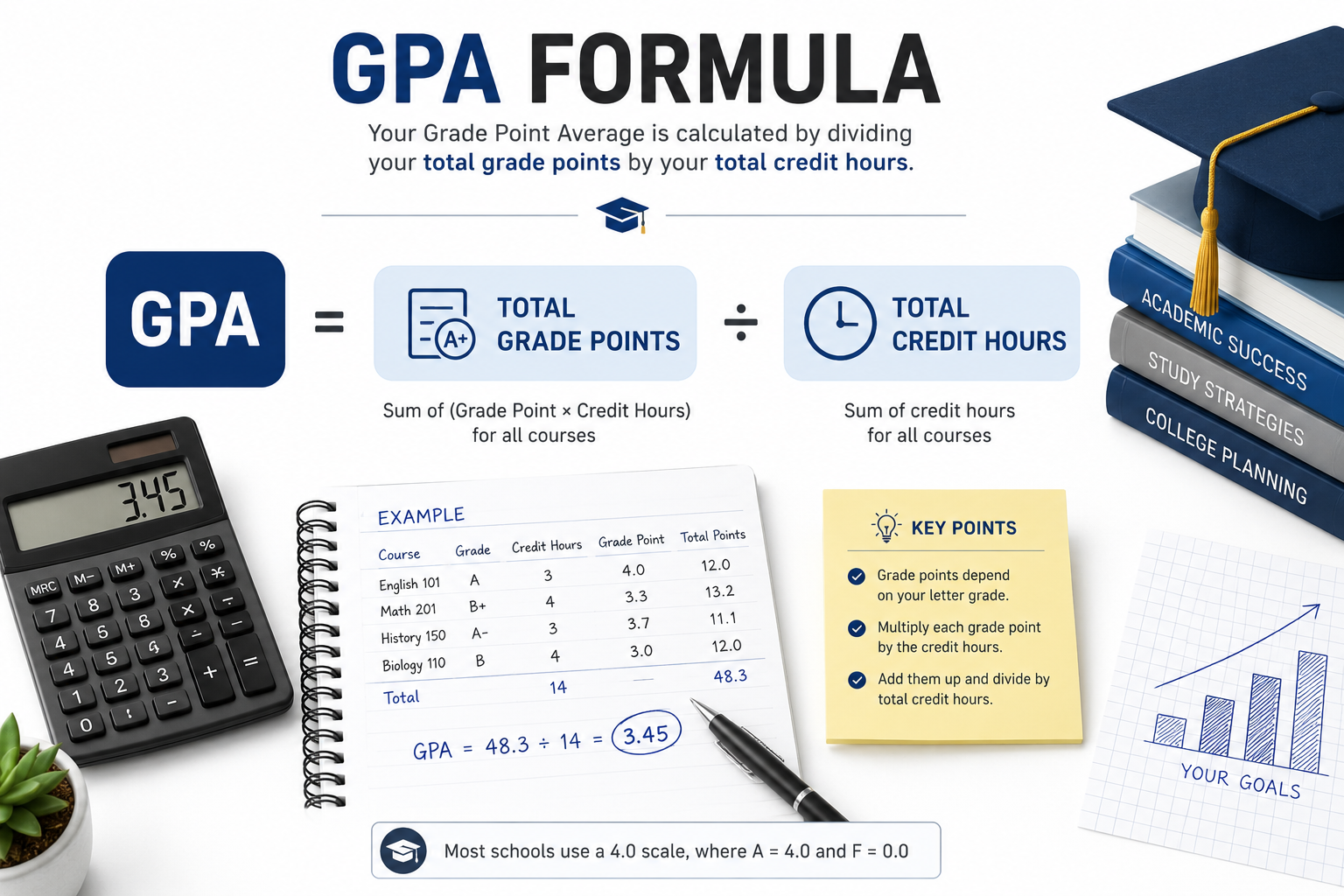
Formula:
GPA = Total Grade Points ÷ Total Credit Hours
So:
36.3 ÷ 10 = 3.63 GPA
That is the final GPA.
Example of GPA Calculation
If a student gets:
A in Math
B+ in Science
A- in English
Then the GPA would be 3.63 on a 4.0 scale.
This is usually considered a strong academic result.
Common Mistakes When Calculating GPA
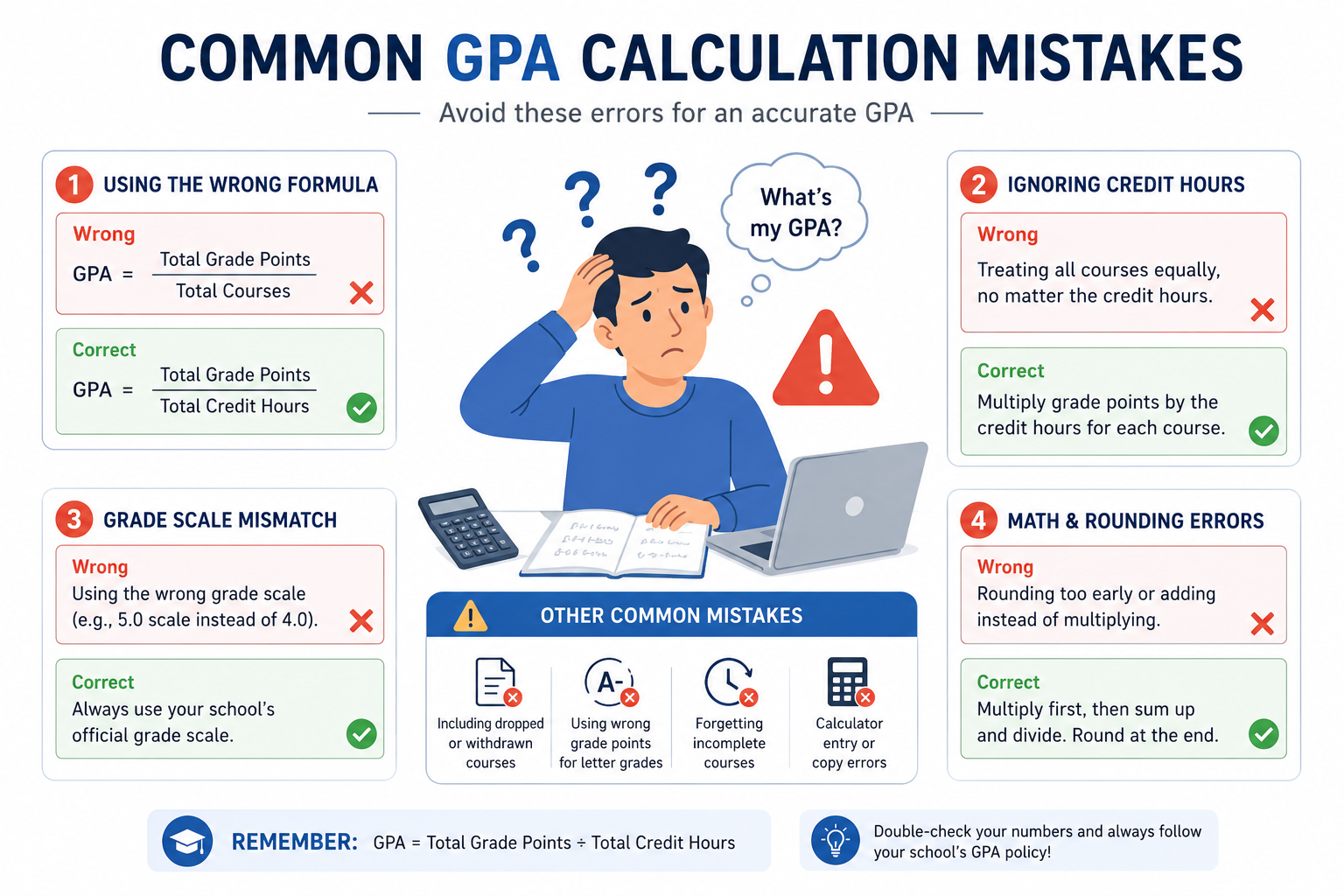
Many students make small mistakes like:
Forgetting credit hours
Using the wrong grade scale
Mixing percentage with GPA
Adding grades without weighting
Double-checking these can improve accuracy.
Can GPA Scales Be Different?
Yes. Some schools and countries may use:
4.0 GPA scale
5.0 GPA scale
Weighted GPA
Custom grading systems
Always check your school’s grading policy.
Why GPA Matters
GPA can affect:
College admissions
Scholarships
Academic standing
Internship opportunities
Graduation eligibility
That’s why understanding GPA is useful.
This guide is useful for students who want to understand how GPA is calculated and how course grades and credit hours affect overall academic performance.
Conclusion
Calculating GPA becomes much easier when you understand grade points, credit hours, and the correct formula. By multiplying grade points by credit hours and dividing by total credits, students can estimate their GPA more accurately.
Whether you want to track semester progress, improve academic performance, or plan future goals, knowing how GPA works can help you make better academic decisions. If you want faster results, you can also use our GPA Calculator to calculate GPA instantly.
Related Calculators & Guides
GPA Calculator
Grade Scale Calculator
Percentage to GPA Conversion Guide
Semester GPA vs Cumulative GPA
Final Grade Calculator
Average Grade Calculator